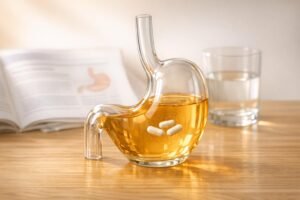
Chronic acid reflux is often caused by low stomach acid, not excess acid, a distinction that explains why millions of people remain symptomatic despite taking proton pump inhibitors (PPIs) and antacids. Low stomach acid, or hypochlorhydria, disrupts digestion, weakens the lower esophageal sphincter (LES), and allows stomach contents to backflow into the esophagus, producing the same burning sensation people mistakenly attribute to too much acid.
By addressing the root cause, restoring adequate stomach acid, it becomes possible to break the cycle of temporary relief and worsening symptoms. Here is what the current evidence says about hypochlorhydria, why it is so often misdiagnosed, and how to support digestive health through diet, lifestyle, and targeted supplementation.
Does Low Stomach Acid Really Cause Acid Reflux?
Low stomach acid can cause acid reflux by impairing the chemical signal that keeps the lower esophageal sphincter (LES) closed. The LES, a muscular valve separating the stomach from the esophagus, requires a sufficiently acidic gastric environment to maintain proper tone. When stomach acid falls and pH rises, that signal weakens, allowing the LES to relax at the wrong time and permitting even small amounts of stomach contents to escape upward into the esophagus.
A 2019 pilot study published in the Scandinavian Journal of Gastroenterology by Carabotti et al. confirmed that reflux symptoms occur in patients with confirmed hypochlorhydria, demonstrating that low acid does not prevent esophageal irritation. The esophagus lacks the protective mucosal lining found in the stomach, so even weakly acidic or pepsin-containing material can trigger burning and inflammation. This explains why low-acid reflux feels identical to high-acid reflux, despite having entirely different underlying causes.
Low stomach acid also disrupts digestion in other ways. Proteins that require pepsin activation remain partially undigested. Carbohydrates that pass incompletely into the small intestine become fuel for bacterial fermentation, generating gas that increases intra-abdominal pressure and forces the LES open further. The result is a self-reinforcing cycle: insufficient acid leads to poor digestion, bacterial overgrowth, increased pressure, and worsening reflux, even as the burning sensation leads patients and clinicians to assume excess acid is the problem.
What Is Hypochlorhydria?
Hypochlorhydria is the reduced production of hydrochloric acid (HCl) in the stomach. A healthy stomach maintains a pH between 1.5 and 3.0, which is necessary for several critical functions beyond food breakdown.
Stomach acid activates pepsin, the enzyme responsible for converting dietary proteins into amino acids the body can absorb. It also facilitates absorption of key minerals, including iron, zinc, magnesium, and calcium. Without sufficient acid, this absorption process becomes markedly less efficient. According to a 2015 review in the American Journal of Clinical Nutrition by Betesh et al., gastritis-induced achlorhydria is an independent cause of iron-deficiency anemia through severe nonheme iron malabsorption, a finding that highlights how broadly low stomach acid affects nutritional status.
Gastric acid also serves as a first-line antimicrobial defense. At a pH of 3 or below, most bacteria, viruses, and fungi are neutralized rapidly. When acid levels fall, pathogens can survive, multiply, and migrate upward into the small intestine. This bacterial overgrowth generates gas, bloating, and pressure on the LES, compounding reflux risk.
Hypochlorhydria becomes more prevalent with age. A 2023 population-based cohort study in Japan by Inoue et al. found that atrophic gastritis, the condition marked by loss of acid-producing cells, affects approximately 40% of adults in the studied population, with prevalence rising significantly with age. Despite this, reflux symptoms in older adults are routinely attributed to excess acid, leading to treatments that suppress acid production further and risk worsening the underlying problem.
How Does Low Stomach Acid Trigger Acid Reflux Symptoms?
Low stomach acid disrupts digestion through both chemical and mechanical pathways, each of which contributes directly to reflux.
Does Bacterial Overgrowth Drive Reflux?
Bacterial overgrowth drives reflux by increasing intra-abdominal gas pressure, which forces the LES open. When gastric pH rises above 3, bacteria that would normally be destroyed survive, thrive, and ferment undigested carbohydrates in the gut. The resulting gas causes bloating and upward pressure on the LES.
Research published in Clinical Gastroenterology and Hepatology by Lo and Chan supports this connection: a 2013 meta-analysis of 11 studies (n=3,134) found that PPI use was statistically associated with a significantly higher risk of small intestinal bacterial overgrowth (SIBO), particularly when diagnosis was made by the most accurate testing method (duodenal/jejunal aspirate culture). A more recent 2024 study in Advances in Pharmacological and Pharmaceutical Sciences by Lim et al. found that approximately 31.7% of long-term PPI users tested positive for SIBO via glucose breath test, with risk rising further in elderly patients. Medications prescribed to reduce reflux symptoms may paradoxically promote the bacterial imbalances that sustain them.
How Does Low Stomach Acid Affect the Lower Esophageal Sphincter?
Insufficient stomach acid directly impairs LES function by removing the chemical signal that prompts the valve to close and remain closed. The LES is designed to open only during swallowing. Adequate gastric acidity maintains LES tone through a cascade of digestive signaling. When acid is low, that cascade is disrupted, and the LES fails to maintain sufficient pressure against refluxing contents.
Unlike the stomach, the esophagus has no protective mucous lining. Even small amounts of gastric acid or pepsin cause burning and inflammation when the LES does not close properly. Continuing to suppress acid production with PPIs without addressing the root cause only weakens LES signaling further, creating a difficult-to-break cycle.
What Are the Symptoms of Low Stomach Acid Beyond Reflux?
Low stomach acid presents a range of symptoms beyond heartburn that can affect digestion, energy, and physical health.
The most recognizable signs appear during or shortly after eating: bloating, belching, or gas within 30 to 60 minutes of a meal; a sense of early fullness; feeling that food digests unusually slowly; and, in some cases, aversion to protein-rich foods due to discomfort from impaired pepsin activity.
What Nutritional Deficiencies Does Low Stomach Acid Cause?
Low stomach acid causes iron, B12, zinc, and magnesium deficiencies by impairing the absorption mechanisms that depend on an acidic gastric environment. Based on articles retrieved from PubMed, a 1999 review in the Annual Review of Nutrition by Baik and Russell confirmed that hypochlorhydria in atrophic gastritis reduces the release of protein-bound vitamin B12 from food and promotes bacterial overgrowth that competes for available B12, making this deficiency particularly prevalent in older adults. A 2017 review in the American Journal of Clinical Nutrition confirmed that long-term PPI use lasting more than 12 months is an established risk factor for vitamin B12 deficiency, though individual impact varies and should be assessed by a clinician.
Iron-deficiency anemia is another documented consequence. The 2015 review by Betesh et al. in the American Journal of Clinical Nutrition found that achlorhydric patients demonstrate severe malabsorption of nonheme dietary iron that persists even after anemia develops, indicating a persistent deficit that dietary changes alone cannot correct without addressing stomach acid.
External signs may also include brittle nails (often linked to impaired zinc and protein absorption) and skin issues related to systemic inflammation from incompletely digested proteins. Chronic cough, hoarseness, or a sensation of a lump in the throat may occur when stomach contents reach the upper airways through a relaxed LES.
How Is Low Stomach Acid Diagnosed?
Standard diagnostic tools, including endoscopy and pH monitoring, are designed to detect excess acid or structural problems and frequently miss hypochlorhydria. This leaves many patients misdiagnosed and placed on acid-suppressing medications that worsen the underlying condition.
Several practical approaches offer more targeted insights. Nutritional deficiency markers, including low serum B12, iron, magnesium, and zinc, can signal insufficient acid production. Noticing whether digestion improves after consuming apple cider vinegar or digestive bitters before meals may suggest that additional acid support is helpful. The baking soda burp test, dissolving 1/4 teaspoon of baking soda in 4 to 6 ounces of water and drinking it on an empty stomach, then timing the first burp, is another at-home option, though it lacks clinical validation and should be interpreted cautiously alongside other findings.
These methods highlight the gap left by conventional testing and the need for more individualized diagnostic approaches.
What Is the Betaine HCl Challenge Test?
The Betaine HCl challenge test assesses low stomach acid by measuring the body’s tolerance to supplemental hydrochloric acid. If stomach acid production is insufficient, supplemental HCl is typically well-tolerated. If acid levels are adequate, the supplement produces a noticeable warming or burning sensation.
To perform the test, begin with one 500 mg Betaine HCl capsule with pepsin after a protein-rich meal. If no warming sensation occurs, increase by one capsule at each subsequent protein meal, up to a maximum of eight capsules. When mild warmth is felt, that is the threshold. Reduce by one capsule to find the maintenance dose.
A small pilot study cited in nutritional medicine literature reported a rapid reduction in gastric pH following Betaine HCl supplementation in individuals with medication-induced hypochlorhydria, though this evidence is preliminary and larger clinical trials are needed before firm dosing recommendations can be made.
Important precautions: Do not perform this test if taking NSAIDs (such as ibuprofen or aspirin) or corticosteroids (such as prednisone), as these medications damage the stomach lining and raise the risk of ulcers or bleeding when combined with supplemental HCl. Anyone with a history of gastritis, peptic ulcers, or esophagitis should consult a qualified integrative practitioner before attempting this approach.
How Can You Increase Stomach Acid Naturally?
Stomach acid production can be supported through targeted dietary habits, lifestyle adjustments, and carefully selected supplements that work with the body’s digestive physiology rather than against it.
What Dietary Changes Support Stomach Acid Production?
Parasympathetic nervous system activation before meals supports stomach acid production by signaling the body to prepare for digestion. When the body is in a stress response, digestive secretions decline. Taking one or two slow diaphragmatic breaths before eating activates the vagus nerve and shifts the body into a digestive-ready state.
Chewing food thoroughly, aiming for 20 to 30 chews per bite, aids mechanical digestion and sends stronger signals to the stomach to ramp up acid output. Limiting fluid intake during meals prevents dilution of stomach acid: hydrate 15 minutes before eating or two hours afterward, and limit fluid to a few sips during the meal itself.
Natural acidifiers can provide additional support. One teaspoon to one tablespoon of raw, unfiltered apple cider vinegar diluted in four ounces of water before meals can help lower gastric pH. Bitter greens such as dandelion, arugula, or radicchio eaten at the start of a meal stimulate acid, bile, and enzyme release through bitter taste receptors. Stopping at roughly 80% fullness allows the stomach adequate room to churn and process food, reducing the risk of reflux caused by excessive pressure on the LES.
How Do Betaine HCl and Digestive Bitters Support Digestion?
Betaine HCl provides temporary supplemental hydrochloric acid that supports protein digestion and gastric signaling when the body’s own production is insufficient. Based on the available evidence, it is most effective when taken at the start of protein-rich meals. The effects are relatively rapid in onset and last approximately 70 to 80 minutes, making timing with meals important.
Start with one 500 to 650 mg capsule containing pepsin at the beginning of a protein meal. If no warming sensation occurs, increase by one capsule at the next protein meal until mild warmth is felt, then reduce by one capsule to establish a maintenance dose. Do not take Betaine HCl on an empty stomach. Avoid use alongside NSAIDs or corticosteroids. If significant burning occurs, neutralize with one teaspoon of baking soda dissolved in water.
For a gentler approach, digestive bitters made from gentian, dandelion, artichoke, or similar botanicals stimulate acid, bile, and enzyme production through taste receptor activation. They can be taken as a tincture 10 to 15 minutes before meals or consumed as bitter greens. While large clinical trials on digestive bitters are limited, their use in traditional and integrative medicine reflects consistent anecdotal and emerging mechanistic support.
If chronic reflux has caused esophageal or stomach lining irritation, soothe the affected tissue first with demulcent supports such as DGL (deglycyrrhizinated licorice), marshmallow root, slippery elm, or aloe vera juice before introducing acid-boosting supplements.
When Should You Seek Professional Guidance for Chronic Reflux?
Persistent symptoms after several weeks of dietary and lifestyle changes warrant professional evaluation. Functional medicine practitioners and integrative gastroenterologists can perform targeted testing to identify underlying conditions, including SIBO, H. pylori infection, or significant nutritional deficiencies, that require more than self-directed support.
Certain warning signs should never be ignored. These include difficulty or pain when swallowing, a persistent sensation of a lump in the throat, unexplained hoarseness or chronic cough, or unexplained chest pain. Reflux symptoms occurring at least twice per week for several weeks may meet the clinical criteria for gastroesophageal reflux disease (GERD) and warrant investigation for complications such as esophageal inflammation, ulcers, Barrett’s esophagus, or structural issues such as a hiatal hernia.
For anyone who has been on PPIs for an extended period, stopping suddenly can trigger rebound hyperacidity that makes symptoms significantly worse. A gradual tapering plan developed with a healthcare provider allows the body to adjust safely.
Before starting high-dose Betaine HCl or pepsin supplementation, consult a practitioner, particularly if you use NSAIDs, corticosteroids, or have any history of gastrointestinal bleeding. Accurate testing is always preferable to trial and error. If chronic fatigue, brittle nails, hair loss, or skin issues suggest nutritional malabsorption, a practitioner can test for specific deficiencies and develop a targeted supplementation plan alongside a broader digestive restoration protocol.
Conclusion
Chronic acid reflux that does not respond to standard treatment is often a sign that low stomach acid, not excess acid, is the underlying issue. When the stomach does not produce sufficient acid, the LES may fail to close properly, digestion is impaired, bacterial overgrowth increases intra-abdominal pressure, and nutritional deficiencies develop. The result is a cycle of symptoms that acid-suppressing medications address only on the surface.
The evidence from PubMed-indexed research supports the connection between hypochlorhydria, SIBO risk from acid suppression, and downstream effects including iron and B12 deficiency. Addressing root-cause digestive dysfunction, through mindful eating practices, targeted supplementation such as Betaine HCl or digestive bitters, and professional evaluation of underlying conditions like SIBO or H. pylori, represents a more durable approach than continued acid suppression.
Healing the digestive system takes time and appropriate professional support. Supporting stomach acid production rather than suppressing it is a logical first step for many people with chronic, treatment-resistant reflux.
For more on integrative approaches to digestive health and reflux relief, visit refluxsummit.com.
Call to Action
If you are ready to explore the root causes of your reflux, the Reflux Online Summit offers free expert sessions led by board-certified integrative physicians, functional medicine practitioners, and naturopaths. Through detailed interviews, you will learn how low stomach acid affects LES function, contributes to bacterial overgrowth, and drives nutrient deficiencies, and you will gain practical, evidence-informed strategies including how to taper off PPIs safely, how to use Betaine HCl and digestive bitters, and how to make dietary adjustments that restore digestive balance.
Whether you are managing GERD, LPR, SIBO, or nutritional deficiencies related to impaired digestion, the summit provides accessible tools to support your body’s natural processes and move toward lasting relief.
Visit refluxsummit.com today to access expert interviews, resources, and integrative approaches to digestive health.
Frequently Asked Questions
Can low stomach acid cause acid reflux symptoms?
Yes. When stomach acid levels are insufficient, the lower esophageal sphincter may fail to close tightly, allowing stomach contents to escape into the esophagus and produce heartburn. Insufficient acid also impairs digestion and promotes bacterial overgrowth, both of which increase intra-abdominal pressure and worsen reflux.
What are the symptoms of low stomach acid (hypochlorhydria)?
Hypochlorhydria commonly causes bloating, belching, and gas within an hour of eating; a feeling of early fullness; slow digestion; and aversion to protein-rich foods. Over time, it can interfere with the absorption of iron, B12, zinc, and magnesium, leading to deficiencies that affect energy, immunity, and overall health.
How does insufficient stomach acid lead to heartburn?
Low stomach acid impairs the chemical signal that keeps the LES closed. When the LES relaxes inappropriately, stomach contents, including acid and the enzyme pepsin, reach the esophagus, which lacks a protective lining and responds with burning and inflammation.
Why do PPIs sometimes worsen acid reflux over time?
PPIs reduce gastric acid to address reflux symptoms, but long-term use can disrupt digestion, promote bacterial overgrowth in the small intestine, weaken LES signaling, and contribute to nutritional deficiencies. According to a 2013 meta-analysis in Clinical Gastroenterology and Hepatology, PPI use is statistically associated with significantly higher SIBO risk, a condition that itself worsens reflux through increased intra-abdominal gas pressure.
What tests can identify low stomach acid?
The Betaine HCl challenge test is a widely used functional approach that evaluates the body’s response to supplemental hydrochloric acid. Clinicians may also assess nutritional markers (B12, iron, zinc, magnesium) and review symptoms and response to dietary acid support. Standard endoscopy and pH testing are not designed to detect hypochlorhydria reliably.
How is low stomach acid treated to relieve reflux?
Treatment focuses on restoring the body’s natural acid production through dietary practices (bitter foods, mindful eating, apple cider vinegar), supplementation (Betaine HCl with pepsin, digestive bitters), and professional evaluation of underlying contributors such as SIBO, H. pylori, or atrophic gastritis. All supplementation should be used under professional supervision, particularly for individuals on NSAIDs, corticosteroids, or with a history of ulcers.
Is it possible to have acid reflux without high stomach acid?
Yes. As confirmed by peer-reviewed research on atrophic gastritis and hypochlorhydria, reflux symptoms can occur and worsen even when stomach acid levels are low. The mechanism involves LES dysfunction, bacterial gas pressure, and pepsin activity rather than acid volume alone.
Disclaimer: This article is for informational purposes only and does not constitute medical advice. Always consult a qualified healthcare provider before making changes to your treatment plan.