Debbie Grayson transformed her experience as a pharmacist and the tragic passing of her sister into a mission to revolutionize reflux care. In this powerful conversation, she reveals the overlooked risks of long-term PPI use, explains the physiology behind rebound acid, and offers holistic, evidence-based strategies to heal naturally. Whether you’re a patient or a practitioner, Debbie’s insights bring clarity, compassion, and hope to the reflux recovery journey.
Debbie’s Journey into Reflux and PPIs
Josef Kreitmayer:
Welcome to another amazing session here at the Reflux Summit. I’m super happy to welcome Debbie Grayson. Debbie, great to have you.
Debbie Grayson:
Hi Josef, happy to be here.
Josef Kreitmayer:
Debbie is a pharmacist with 30 years of experience and a certified nutritional therapist for over eight years. She specializes in digestive health, particularly reflux management, and focuses on educating both patients and practitioners on the appropriate use of PPIs—proton pump inhibitors—as well as alternative solutions. She’s developed a comprehensive program to reduce PPI dependency and manage reflux through tailored nutrition and lifestyle adjustments. Debbie, is there anything else you’d like the audience to know?
Debbie Grayson:
It’s helpful for people to understand why this became such a focus for me. When I first qualified as a pharmacist, I believed medicine had all the answers. If someone had a problem, we gave them a drug. I didn’t give much thought to how medications impacted digestion, nutrient status, or why side effects occurred. That changed after losing my sister Angela to a brain hemorrhage. Around that time, I was on a course about natural digestive support, and it started connecting dots for me—especially how impactful PPIs can be on the digestive system.
I used to think reflux was just too much acid that needed to be stopped. But as I learned more, I realized hydrochloric acid is essential for digestion—affecting bile flow, enzyme production, intrinsic factor, and more. Blocking acid affects the entire digestive cascade. PPIs have their place, and we’ll get into that, but many patients—and even prescribers—treat them like antacids without understanding the risks.
It was a major realization that the PPI my sister had been prescribed contributed to the chain of events leading to her death. That made me determined to educate both patients and professionals about better approaches to managing reflux.
Josef Kreitmayer:
Thank you for sharing your story. It’s a tragedy, but also a beautiful legacy.
Debbie Grayson:
Exactly. This is Angela’s legacy—spreading awareness around the globe.
When PPIs Are Appropriate and the Issue of Overuse
Josef Kreitmayer:
PPIs are a powerful class of drugs, one of the top-selling globally. They have their place, but they’re often overused. Can you walk us through that?
Debbie Grayson:
Absolutely. If someone has acute issues like gastritis, esophagitis, or erosion, PPIs play an important role. They can help mucosal healing by reducing acidity for four to twelve weeks. But the idea should be to wean off after that and reassess.
They’re critical in some scenarios, like with Barrett’s esophagus or for patients on NSAIDs or blood thinners. PPIs help by stimulating mucin production via the prostaglandin pathway, which protects the mucosal layer. But for lifestyle-driven GERD and LPR, the emphasis needs to be on healing and long-term management through diet and lifestyle—not on long-term medication use.
There’s also the issue of rebound. Whether the recurrence is due to stopping the PPI or not addressing lifestyle, it indicates we’re not getting to the root cause.
Reflux Raft Dosing, Ingredients, and Innovations
Josef Kreitmayer:
In short-term treatment, PPIs reduce acidity and allow healing. Is that the main benefit?
Debbie Grayson:
Yes, and the mucin production helps repair the gastric lining. When we think about NSAIDs, which reduce mucin, a PPI can counteract that and reduce the risk of gastritis.
Josef Kreitmayer:
How long until patients typically feel relief?
Debbie Grayson:
Some report instant relief, but that can be psychological. Typically, it takes three to five days for the full benefit, while healing takes longer.
The Challenges of Treating LPR and Silent Reflux
Josef Kreitmayer:
With LPR and silent reflux, the reflux isn’t necessarily acidic. What’s your take on PPIs for those cases?
Debbie Grayson:
Exactly. PPIs aren’t always effective for silent reflux or LPR because they aren’t strictly acid-driven. Pepsin and bile often play a bigger role. Bile, although alkaline, is very caustic and damaging. That’s why many LPR patients don’t respond well to PPIs—they need different support, particularly with bile flow.
Rebound Acid and the Challenge of Weaning Off PPIs
Josef Kreitmayer:
There’s the successful case of people using PPIs short-term, then being fine. But many struggle to get off. Why?
Debbie Grayson:
Because nobody educates patients about lifestyle changes. Without those changes, symptoms return—either due to rebound or unresolved causes.
When you block acid, the body tries to compensate. It upregulates histamine and gastrin production to force acid production. When the PPI is stopped, those signals are still active, so acid surges back. It’s not true dependence—it’s physiology. But the symptoms scare people back onto PPIs. That’s why I emphasize gradual weaning with lifestyle support.
Debbie’s Protocol for PPI Weaning
Josef Kreitmayer:
So, how do you help someone get off PPIs safely?
Debbie Grayson:
Step one is understanding what caused the reflux in the first place. We fix diet, stress, posture, and digestion. Once they’re stable and mostly symptom-free, I reduce the PPI dose. Then we alternate days for 10–14 days. This lowers relapse rates.
Throughout, I use supplements—particularly alginates. They form a raft that sits on the stomach contents, preventing acid from rising. They’re especially useful at night or when lying down.
Alginates help protect the mucosa during rebound, especially when reflux reaches the throat or nasal passages. That damage can lead to cancer, so protecting the esophagus is critical during the weaning process.
Why Alginates Are Underutilized
Josef Kreitmayer:
Alginates are talked about more lately, but few doctors recommend them. Why?
Debbie Grayson:
Cost. PPIs are dirt cheap—literally pennies in the UK. Alginates are £10–£20 a bottle. So, GPs go for the cheaper option. Alginates don’t stop acid production—they stop acid damage. Functional practitioners use them more, especially now that weight loss medications are increasing reflux issues.
Long-Term Risks of PPIs
Josef Kreitmayer:
What are the dangers of long-term PPI use?
Debbie Grayson:
Nutrient deficiencies—especially B12 and magnesium—are major concerns. B12 is crucial for energy and cognition; its deficiency is linked to dementia. Magnesium impacts everything from muscle function to mental health.
There’s also risk for osteoporosis, cardiovascular disease, and potentially endocrine-related cancers due to chronic gastrin elevation. It’s not that everyone on PPIs will get cancer—but we shouldn’t use them casually for lifestyle issues.
Lifestyle Factors That Influence Reflux
Josef Kreitmayer:
What’s your approach for someone who wants to get to the root of their reflux?
Debbie Grayson:
There’s the conventional advice—avoid heavy meals, spicy food, alcohol, etc.—and then there’s what I call the real impact factors: stress and modern eating habits. We eat too fast, too distracted, and too stressed.
We’ve lost the cephalic phase of digestion—the anticipation and preparation. That’s why I encourage mindful eating: sit at a table, chew thoroughly, avoid screens, and prepare mentally for meals. Until that’s in place, there’s no point trying to remove the PPI.
Stress Buckets, Coffee, and the Overflow Principle
Josef Kreitmayer:
What other lifestyle-induced issues contribute to reflux?
Debbie Grayson:
Obesity, pregnancy, smoking—these all contribute. But it’s not always one factor. Think of it like a bucket: one factor may be fine, but pile on too many and it overflows. You might tolerate coffee on a weekend, but add stress and bad posture, and you’ll have symptoms.
Food Reactions, Constipation, and H. pylori
Josef Kreitmayer:
When stress manifests as constipation or food sensitivities, what’s going on?
Debbie Grayson:
It’s usually not the food—it’s the process. Poor digestion leads to partially digested food entering the bloodstream, triggering reactions. I rarely use food intolerance testing because the results are often just a reflection of poor digestion.
Healing the Mucosal Lining
Josef Kreitmayer:
Once the lining is damaged, what helps with healing?
Debbie Grayson:
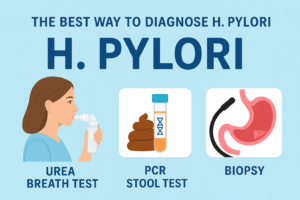
I use demulcents like slippery elm, marshmallow, gamma oryzanol, and sometimes glutamine (cautiously). A favorite is Gastrozyme, which contains Substance U—essentially cabbage juice extract for healing ulcers. H. pylori is overstated in reflux—it’s more relevant to ulcers.
Bile Sludge and Bile Reflux
Josef Kreitmayer:
Let’s talk about bile reflux. How does that happen?
Debbie Grayson:
Poor blood sugar control leads to excess cholesterol, which thickens bile. Hormone fluctuations, thyroid issues, and sluggish bile can cause it to backflow into the stomach. That bile can cause severe reflux, trapped wind, or even mimic heart attacks. My mom had this—eventually traced to gallstones. Once her gallbladder was removed, the symptoms reduced significantly.
Supporting Bile Flow
Josef Kreitmayer:
How do you support bile sludge?
Debbie Grayson:
Address diet—especially sugar—and manage thyroid or hormonal imbalances. Supplement-wise, I use lecithin, D-limonene (orange peel extract), and TUDCA (a bile salt). They dissolve the sludge and help flow. Once symptoms improve, patients may use them periodically based on need.
Practitioner Training and Patient Resources
Josef Kreitmayer:
Tell us about your work with clients and practitioners.
Debbie Grayson:
I mentor hundreds of practitioners and run the Reflux Accreditation Program. It covers the physiology, symptoms, diet, lifestyle, and PPI weaning strategies. We hold live case calls and maintain a directory of certified practitioners globally. Patients can find someone local or by specialty at digestionwithconfidence.co.uk.
For practitioners, the course is open year-round at practicewithconfidence.thinkific.com. It’s my mission to raise awareness—among both patients and the medical community—that lifestyle and targeted strategies can manage reflux far more effectively.