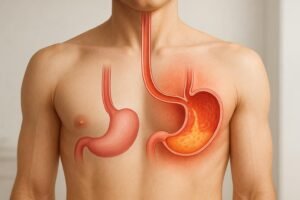
If heartburn tends to flare after meals, wake you at night, or spike during stressful weeks, the cause is rarely random excess stomach acid. Acid reflux more often emerges when digestion timing, abdominal pressure, and nervous system signals fall out of sync.
That is why many people cycle through antacids or rigid elimination diets and experience only temporary relief. From a functional standpoint, acid reflux and GERD are less about an overabundance of acid and more about how digestion is coordinated. Understanding that distinction changes what actually works.
This guide explores evidence-informed, natural strategies to soothe acid reflux by addressing digestion mechanics, lifestyle patterns, and stress physiology, the factors most often overlooked in conventional advice.
Acid Reflux and GERD: A Functional View of What’s Happening
Acid reflux occurs when stomach contents move upward into the esophagus, irritating tissue that is not designed to handle repeated acid exposure. When this happens frequently, it is classified as gastroesophageal reflux disease (GERD).
From a functional and integrative perspective, reflux is rarely caused by acid alone. Research increasingly points to delayed gastric emptying, abdominal pressure, impaired lower esophageal sphincter (LES) function, and nervous system dysregulation as primary contributors, meaning many people with reflux do not have too much acid; they have poorly coordinated digestion.
How Common Is GERD? What the Evidence Shows
Estimating the true global prevalence of GERD is complicated by inconsistent definitions across studies. A large 2020 systematic review and meta-analysis published in Scientific Reports, covering 102 studies and 37 countries, found a global pooled GERD prevalence of approximately 14%, with North American rates approaching 20%. An earlier 2017 meta-analysis in Gut similarly found wide international variation (from roughly 2.5% in China to over 20% in some European populations) depending on the diagnostic criteria used. Both analyses confirmed that obesity, smoking, and age over 50 years are among the strongest independent risk factors for GERD.
Note: The article’s original claim that “GERD affects roughly 20% of adults in Western countries” is a reasonable approximation for North American populations specifically, but the global figure is closer to 14%. We have replaced the unsourced attribution to the American College of Gastroenterology with the verified figures above.
Common Root Causes of Acid Reflux and Heartburn
Reflux tends to emerge from a combination of mechanical, neurological, and lifestyle factors rather than a single trigger food. Frequently involved contributors include:
- Delayed gastric emptying (food remaining in the stomach too long), supported by research linking delayed gastric emptying to increased non-acid reflux
- Weak or poorly timed lower esophageal sphincter (LES) relaxation
- Abdominal pressure from large meals, tight clothing, or excess weight
- Eating late at night or lying down shortly after meals
- Chronic stress and insufficient sleep
- Individual food sensitivities rather than universal “trigger foods”
How to Get Rid of Acid Reflux Naturally
1. Rethink Diet Beyond Generic Trigger Lists
Diet is one of the most misunderstood aspects of reflux management. How you eat often matters as much as what you eat. A comprehensive 2025 narrative review of dietary and lifestyle management for GERD, published in the Korean Journal of Gastroenterology, found that individualized dietary avoidance outperforms blanket restriction, and that meal timing, portion size, and eating pace are consistently underweighted in clinical counseling.
Foundational dietary strategies:
Eat smaller, more frequent meals
Large meals increase stomach pressure and make reflux more likely. Smaller portions reduce mechanical strain on the LES and support smoother gastric emptying.
Identify personal triggers rather than avoiding everything
While citrus, tomatoes, chocolate, alcohol, fried foods, and coffee are commonly flagged, evidence from a 2025 dietary and lifestyle review in GERD management highlights that real-world responses vary considerably between individuals. Universal food restriction can reduce dietary quality without reliably improving symptoms.
Choose foods that support digestion
Commonly well-tolerated options include oatmeal and other whole grains, leafy greens and cooked vegetables, lean proteins (fish, chicken, eggs), and fruits with lower acidity such as bananas, pears, and melons.
Be mindful with liquids during meals
Large volumes of fluid during eating can increase stomach distension. Many people find it helpful to sip during meals and consume more fluids between rather than during eating.
2. Herbal Approaches That May Support Heartburn and GERD
Certain herbal preparations have been studied in the context of digestive health, though the evidence base varies considerably. Always consult a healthcare provider before adding supplements, as herbal preparations can interact with medications.
Ginger
A randomized controlled trial in the World Journal of Gastroenterology found that ginger (1.2 g) accelerated gastric emptying and increased antral contractions in patients with functional dyspepsia compared with placebo. Faster gastric emptying may reduce the volume of stomach contents available to reflux. Importantly, that trial did not find a significant improvement in subjective gastrointestinal symptoms, highlighting that while ginger shows mechanistic promise, more research in GERD-specific populations is needed.
Chamomile
Chamomile has a long history of traditional use for digestive discomfort. However, no well-designed clinical trials specifically examining its effect on GERD symptoms were identified in the current literature search. It may be considered as a calming beverage for stress-related digestive symptoms, but it should not be presented as an evidence-based GERD remedy.
DGL Licorice (deglycyrrhizinated licorice)
DGL is sometimes discussed in integrative medicine contexts. However, no randomized controlled trials specifically examining DGL for GERD symptoms were identified through a thorough PubMed search. Any claims about its effectiveness for GERD remain insufficiently substantiated by clinical evidence and have therefore been presented with appropriate caution.
Aloe vera (purified, ingestible forms)
A small pilot randomized controlled trial in the Journal of Traditional Chinese Medicine found that an Aloe vera syrup reduced the frequency of eight common GERD symptoms and was well-tolerated over four weeks compared with omeprazole and ranitidine. While promising, this was a pilot study with a small sample (79 participants), and larger confirmatory trials are needed before strong recommendations can be made.
3. Lifestyle Changes That Make Reflux Manageable
Lifestyle habits often determine whether reflux becomes chronic or controllable. A systematic review of lifestyle interventions for GERD, published in Clinical Gastroenterology and Hepatology, provides evidence for the following approaches.
Elevate the head of the bed
A systematic review of lifestyle interventions for GERD in Clinical Gastroenterology and Hepatology found that head-of-bed elevation decreased the time spent with supine acid exposure (from approximately 21% to 15%), making it one of the best-evidenced non-pharmacological interventions for nocturnal GERD. Raising the head 15–20 cm (6–8 inches) using a wedge pillow or bed risers is typically recommended.
Achieve and maintain a healthy weight
The same systematic review found that weight loss was associated with meaningfully reduced esophageal acid exposure in two randomized controlled trials, and reduced reflux symptoms in prospective observational studies. Even modest weight reduction can decrease abdominal pressure on the LES.
Stop smoking
The systematic review also found that smoking cessation reduced reflux symptoms in normal-weight individuals in a large prospective cohort (odds ratio 5.67). Both smoking and excess alcohol are understood to relax the LES and may irritate the esophageal lining.
Avoid late evening meals
Randomized controlled trial data cited in the same systematic review showed that late evening meals increased the time spent with supine acid exposure compared with earlier meals (approximately 5 percentage points difference). Allowing two to three hours between your last meal and lying down is a consistently supported recommendation.
Light movement after meals
A 2025 dietary and lifestyle review notes that light postprandial activity is encouraged, while high-intensity exercise immediately after eating should be avoided, as it can increase reflux episodes.
4. Mind–Body Techniques for Long-Term Reflux Relief
The gut and nervous system are closely connected. Chronic psychological stress is associated with altered acid secretion, slowed gastric motility, and heightened esophageal sensitivity, all of which may worsen reflux.
Diaphragmatic breathing
A prospective clinical study in Clinical Gastroenterology and Hepatology found that a standardized diaphragmatic breathing protocol reduced supragastric belching in 60% of treated patients compared with 0% of controls, and significantly improved GERD symptom scores and quality of life. Effects were sustained at four months. The authors note the mechanism may involve increased lower esophageal sphincter pressure during inspiration.
Mindful eating
Eating more slowly and chewing thoroughly is recommended in current GERD dietary guidelines as a behavioral strategy to reduce swallowed air and gastric distension. While large randomized trials isolating mindful eating on GERD outcomes are lacking, it is a low-risk adjunct consistent with the broader evidence on meal pacing.
Gentle movement and yoga
Light postprandial movement such as a short walk is supported as a way to facilitate gastric emptying and reduce reflux frequency. Specific yoga poses as a primary GERD intervention have not been rigorously studied in clinical trials; caution is advised with inversions or poses that increase abdominal pressure.
5. Track Patterns Instead of Guessing
One of the most underused tools in reflux management is structured self-monitoring. Keeping a symptom journal that records meals, portion sizes, meal timing, sleep, stress levels, and symptoms allows personal triggers to emerge that generic advice consistently misses. This approach also improves communication with healthcare providers and helps distinguish occasional reflux from chronic GERD requiring medical evaluation.
When Medical Evaluation Is Important
Natural and lifestyle-based strategies are effective for many people, but they are not a substitute for appropriate medical care. Seek prompt evaluation from a qualified healthcare provider if reflux is accompanied by:
- Difficulty or pain when swallowing
- Unexplained weight loss
- Persistent vomiting
- Chronic cough or new voice changes
- Chest pain (to rule out cardiac causes)
- Symptoms that do not improve with two or more weeks of lifestyle modification
These symptoms may indicate complications such as esophagitis, Barrett’s esophagus, or other structural changes that require endoscopic assessment. Integrative and lifestyle approaches work best as complements to, not replacements for, appropriate medical evaluation and care.
A More Sustainable Way to Think About Reflux
Acid reflux tends to become chronic when digestion is consistently rushed, pressured, or overridden by stress, not simply because one food is “bad” or one supplement is missing.
Lasting relief often comes from understanding how meal timing, portion size, sleep, stress, and movement interact in your individual physiology. When those signals are supported, symptoms frequently diminish without extreme dietary restriction.
If reflux persists despite surface-level changes, the next step is not simply stronger acid suppression, it is a more individualized look at gastric motility, nervous system regulation, and personal dietary triggers, ideally in partnership with a gastroenterologist or specialist trained in functional digestive health.
Frequently Asked Questions
Can acid reflux be resolved naturally?
Many people significantly reduce or eliminate symptoms through personalized dietary changes, evidence-based lifestyle adjustments, and stress regulation. Outcomes depend on the underlying causes and consistency of implementation. Medical evaluation is important if symptoms are frequent, severe, or accompanied by the warning signs described above.
Are PPIs risky long-term?
PPIs are effective and clinically appropriate in many cases. A 2018 review of PPI adverse event mechanisms in Current Drug Metabolism notes that prolonged use has been associated with potential concerns including altered nutrient absorption (particularly magnesium and vitamin B12), changes to the gut microbiota, and increased susceptibility to enteric infections. The reviewers note, however, that randomized trial data often do not confirm adverse effects seen in observational studies, and that decisions about PPI use should be individualized based on clinical need and patient-specific risk factors.
How long do natural approaches take to work?
Some strategies, such as adjusting meal timing or elevating the head of the bed, can produce noticeable improvement within days. Deeper improvements in underlying motility or nervous system regulation typically take weeks to months of consistent practice.
Is reflux caused by low stomach acid?
While impaired acid signaling or hypochlorhydria may contribute in some individuals, this should not be assumed and should never be self-treated without proper clinical evaluation. Self-administering acid or betaine supplements based on a presumed diagnosis can be harmful.
What is the most common reflux management mistake?
Relying on generic trigger food lists while overlooking stress levels, sleep quality, eating speed, and portion size. Individual responses to foods vary widely, and blanket elimination diets without personalization often fail to address the actual drivers of symptoms.