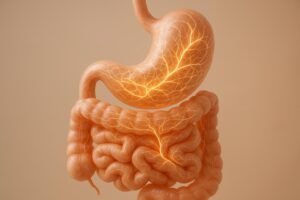
Many patients turn to anti-reflux surgery after years of discomfort, hoping for relief. Yet, for some, symptoms persist or worsen. Why? The answer often lies in overlooked gastric motility issues. While standard tests focus on acid levels and esophageal function, they miss critical insights about the stomach’s electrical activity. This is where the Electrogastrogram (EGG) comes in.
An EGG measures the stomach’s electrical rhythms, revealing how well it empties and contracts. Abnormalities in these rhythms can create pressure that undermines surgical repairs, leading to ongoing symptoms. By including EGG testing in pre-surgical evaluations, patients and surgeons gain a clearer picture of the root causes of reflux, reducing the risk of complications and improving long-term outcomes.
Let’s explore how understanding gastric motility through EGG can lead to better surgical decisions and lasting relief.
TL;DR:
The Core Problem: Up to 20% of anti-reflux surgeries fail anatomically. When a surgical wrap creates a rigid, high-pressure zone, underlying stomach-emptying delays or pyloric valve dysfunctions build up intense internal pressure that eventually breaks down the surgical barrier.
How EGG Works: Using abdominal electrodes, EGG records the frequency and strength of the stomach’s electrical slow-waves before and after eating to pinpoint the root cause of the reflux.
Reading the Rhythms: A normal stomach contracts at 2.5 to 3.6 cycles per minute (cpm). Deviations reveal clear issues: bradygastria (abnormally slow activity) delays emptying, tachygastria (rapid activity) causes ineffective contractions, and low amplitude signals weak stomach muscles.
Surgical Prediction: Preoperative EGG testing differentiates between a pure structural valve issue and a deeper motility disorder. This prevents surgeons from performing procedures destined to fail, leading to better patient screening and personalized care.
Anti-Reflux Surgery: The Search for Lasting Relief
Anti-reflux surgery, commonly performed as fundoplication, offers many patients long-awaited relief after years of persistent reflux symptoms. The procedure mechanically repairs the lower esophageal sphincter to restore its function and reduce dependence on daily medications. While it provides significant improvement for most, between 10% and 20% of patients experience anatomical failure after the initial surgery, with 3% to 7% eventually requiring revisional procedures.
These failures are often not due to surgical technique but rather undiagnosed gastric motility disorders that were overlooked preoperatively. Disruptions in the stomach’s electrical rhythms or problems with the pyloric valve can impair efficient food movement, creating increased pressure that compromises the surgically restored barrier. This leads to recurring reflux, bloating, nausea, and other symptoms. Research shows patients with anatomical failure face a 52.6-fold greater risk of pathological acid exposure, yet structural failure alone does not guarantee that revision surgery will resolve the issue.
Silent motility issues are surprisingly common, with studies indicating that up to 59.7% of patients undergoing anti-reflux surgery show abnormal endoscopic findings even without noticeable symptoms. This underscores the need for thorough preoperative testing, particularly an Electrogastrogram (EGG), to identify suitable surgical candidates versus those who may benefit from alternative treatments. Comprehensive evaluations improve long-term outcomes and enable more personalized, effective care plans.
Understanding Gastric Motility Beyond the Esophagus.
In reflux evaluations, the focus is typically placed on the lower esophageal sphincter (LES) and esophagus, yet gastric motility is often overlooked despite playing a crucial role in whether reflux occurs or persists. The stomach depends on a sophisticated electrical system driven by a natural pacemaker located on the lesser curvature near the cardia. This pacemaker generates rhythmic electrical waves that travel toward the pylorus, coordinating strong, organized contractions. When these rhythms are disrupted or contraction strength weakens, the stomach fails to empty efficiently, causing food and gastric contents to linger and build pressure that overwhelms the LES.
These motility disruptions significantly contribute to reflux symptoms. Research shows that 92% of patients who underwent sleeve gastrectomy exhibited at least one abnormal gastric electrical parameter, with their gastric frequency dropping to 2.3 cycles per minute compared to the normal 3.08 cycles per minute in healthy individuals. Symptomatic patients also experienced more than a 50% reduction in contraction amplitude, and the severity of heartburn was strongly linked to weaker contractions (correlation coefficient of -0.46). Adding further complexity, the pyloric valve can become dysfunctional, creating a “pyloric block” that prevents proper emptying even when strong waves are present, thereby increasing intragastric pressure and forcing acid back through the LES.
Recognizing these gastric factors is essential before anti-reflux surgery. While fundoplication can reinforce the esophageal barrier, it cannot overcome ongoing pressure from poor gastric emptying caused by motility issues or pyloric dysfunction. In such cases, the surgery is likely to fail despite flawless technique. This underscores the critical need for detailed preoperative testing, such as an Electrogastrogram (EGG), to identify underlying motility problems and address reflux at its true source for better long-term outcomes.
What is an Electrogastrogram (EGG)?
An Electrogastrogram (EGG) is a diagnostic test used to monitor the stomach’s electrical activity through electrodes placed on the abdominal skin. This non-invasive method captures the stomach’s slow-wave activity, which is responsible for coordinating contractions and ensuring efficient digestion. By analyzing this data, doctors can identify patients who might benefit from specific anti-reflux treatments.
The test records details like the frequency, strength, and rhythm of electrical signals in the stomach. A healthy stomach typically maintains a rhythm of 2.5 to 3.6 cycles per minute. Deviations from this range, whether the rhythm is too slow, too fast, or irregular, may indicate motility disorders that contribute to reflux symptoms. For those considering anti-reflux surgery, EGG serves as a valuable supplement to other diagnostic tools, offering insights into gastric function that imaging or endoscopy might miss.
How EGG Measures Electrical Activity in the Stomach
The EGG procedure involves attaching electrodes to the upper abdomen, often requiring the skin to be shaved for better contact. The test begins with a 30-minute fasting baseline recording, followed by a post-meal recording that lasts up to four hours after consuming a standardized meal or water load. During the water load satiety test, patients drink up to one liter of water within five minutes, which stimulates the stomach’s electrical rhythms by challenging its capacity to handle volume.
Throughout the test, patients may use a digital app to log symptoms such as bloating, nausea, or discomfort. This real-time tracking helps link specific electrical patterns to physical sensations, offering a clearer picture of how gastric dysfunction affects daily life. To prepare for the test, patients must fast from midnight the night before and avoid promotility medications (like metoclopramide or domperidone) and opiates for at least three days prior.
Reading EGG Results for Gastric Motility Disorders
EGG results are analyzed by focusing on three key metrics: Principal Gastric Frequency (PGF), gastric amplitude, and the Gastric Alimetry Rhythm Index (GA-RI), which assesses rhythm stability. A normal gastric frequency falls between 2.5 and 3.6 cycles per minute. Readings below this range, known as bradygastria (1.0–2.4 cycles per minute), or above it, known as tachygastria (3.7–9.9 cycles per minute), indicate abnormal electrical activity. These irregularities can slow gastric emptying or make contractions less effective, both of which increase the risk of reflux.
Amplitude measures the strength of stomach contractions. In healthy individuals, gastric amplitude averages around 31.5, while those with motility disorders often show significantly lower values, sometimes as low as 14.8. Weak contractions hinder the stomach’s ability to move food efficiently, leading to delayed emptying and higher gastric pressure. Research has shown a direct link between reduced amplitude and more severe heartburn symptoms, with a correlation coefficient of -0.46, illustrating how electrical irregularities contribute to reflux.
| Frequency Range | Classification | Clinical Significance |
| 1.0–2.4 cpm | Bradygastria | Slow electrical activity; delayed gastric emptying |
| 2.5–3.6 cpm | Normal Range | Healthy gastric slow-wave frequency |
| 3.7–9.9 cpm | Tachygastria | Rapid electrical activity; ineffective contractions |
| 10.0–15.0 cpm | Duodenal/Respiratory | Signals from the duodenum or interference from breathing |
When EGG results reveal abnormal patterns, they help determine whether reflux is caused by mechanical issues at the lower esophageal sphincter (LES) or deeper motility problems in the stomach. This distinction is vital for treatment planning, as procedures aimed at strengthening the esophageal barrier may not address underlying gastric dysfunction that continues to create pressure and push stomach contents upward. By understanding these electrical signals, clinicians can better evaluate the role of pyloric function in managing reflux symptoms.
The Pyloric Valve: A Gatekeeper for Digestion and Reflux
To fully grasp reflux mechanisms, it’s important to understand the role of the pyloric valve. Positioned at the stomach’s exit, this muscular ring regulates the flow of partially digested food into the small intestine. Its function relies on precise coordination: as a gastric wave approaches, the first part of the duodenum tightens, signaling the pylorus to relax and allow food to pass. This rhythm ensures smooth digestion and prevents pressure from building up in the stomach.
When this coordination falters, the effects can go beyond simple digestive discomfort. Pyloric dysfunction may result in premature contraction, where the valve closes too soon. Research shows that this early contraction can block the stomach’s wave before it generates enough force to open the valve, leading to incomplete stomach emptying despite strong contractions.
This disruption causes a backup in the digestive system. Even with strong stomach waves, an improperly timed pylorus prevents food from exiting, resulting in gastric stasis, a condition where food lingers in the stomach, increasing internal pressure. This breakdown in coordination plays a critical role in disrupting the digestive process.
Pyloric Dysfunction: A Major Cause of Reflux
Pyloric dysfunction often contributes to reflux, though it may not always be identified during standard evaluations. When the valve fails to open correctly or contracts out of sync, the stomach struggles to empty efficiently. This delay causes proximal gastric pressurization, where rising pressure in the stomach forces its contents upward, overwhelming the lower esophageal sphincter (LES). Even a properly functioning LES can only resist so much pressure before reflux occurs.
Observations from bariatric surgery patients highlight this connection. Electrical disturbances in the stomach are closely tied to reflux symptoms. For instance, studies reveal that weaker stomach contractions (measured by gastric amplitude) are linked to more severe heartburn, with a negative correlation of r = -0.46.
The vagus nerve plays a key role in this process. This nerve regulates stomach contractions by sending parasympathetic signals that control their timing and strength. When vagal tone is disrupted due to chronic stress, inflammation, or surgery, the stomach’s rhythm becomes irregular. Normally, the stomach contracts at a frequency of 2.5 to 3.6 cycles per minute, but post-surgical patients often experience reduced pacing, averaging 2.3 cycles per minute compared to a healthy average of 3.08 cycles per minute.
These irregularities create a perfect storm for increased gastric pressure, which places additional strain on the LES, as detailed below.
How Pyloric Issues Increase Gastric Pressure and Overwhelm the LES
The connection between pyloric dysfunction and LES failure is rooted in basic physiology. When the pylorus fails to open as needed, food and gastric acid accumulate in the stomach, causing prolonged pressure against the esophageal barrier. Unlike brief pressure spikes, this is a sustained increase that persists throughout digestion. The LES, designed to handle temporary fluctuations, becomes overburdened when faced with constant upward force.
Data from post-surgical patients illustrates this well. These individuals often show a reduction in gastric electrical amplitude by more than 50%, leading to weaker stomach contractions. As a result, the stomach must work harder and longer to process food, prolonging the period of elevated gastric pressure. The connection between bloating and reduced gastric amplitude (r = 0.71) further underscores how this pressure buildup is physically felt by patients.
The nervous system’s influence on pyloric function is critical. The vagus nerve ensures smooth, coordinated contractions that move food efficiently from the stomach to the intestine. When this regulation breaks down, due to stress, nerve dysfunction, or surgical complications, the pylorus loses its timing. Gastric waves then hit a closed valve, causing sustained pressure in the upper digestive tract. This chronic pressure not only triggers reflux but also weakens the LES over time, reducing its ability to act as an effective barrier.
Recognizing these dynamics is essential for developing holistic approaches to managing reflux, focusing on restoring proper gastric function and coordination.
Why an EGG is Necessary Before Anti-Reflux Surgery
To predict how well anti-reflux surgery might work, it’s crucial to understand how the stomach’s electrical rhythm operates. An electrogastrogram (EGG) provides valuable insights into gastric function that structural tests alone can’t reveal. While traditional evaluations focus on the anatomy, EGG measures the electrical signals that control digestion. This is especially important since many reflux issues stem from motility disorders rather than mechanical problems with the lower esophageal sphincter (LES).
The stakes are particularly high with surgeries like sleeve gastrectomy, which impacts the stomach’s natural pacemaker region. A study conducted by the University of Auckland in March 2025 examined 38 patients, on average 36 months after undergoing sleeve gastrectomy, using body surface gastric mapping. The results were striking: 92.1% of these patients showed at least one abnormal electrophysiological parameter post-surgery. Their gastric frequencies averaged 2.3 cycles per minute, compared to 3.08 cycles per minute in healthy individuals, and their gastric amplitudes were reduced by more than half.
Without preoperative EGG screening, surgeons risk operating with incomplete information. This gap can lead to procedures that unintentionally worsen motility issues, leaving patients with ongoing symptoms despite successful mechanical repairs. The data shows clear connections: lower gastric amplitudes are linked to more heartburn (r=-0.46), while higher amplitudes are tied to bloating (r=0.71). These findings highlight the importance of considering not just structural issues but also the neural and motility factors that influence digestion. Gaining this level of detail helps predict surgical outcomes more accurately.
Predicting Surgical Outcomes and Identifying Failure Points
EGG testing offers a way to spot potential surgical issues before they arise by identifying specific electrical patterns. For example, the Power Ratio, a measure of gastric electrical activity before and after eating, is a critical indicator. A Power Ratio below 1.0 suggests the stomach struggles to increase its electrical power after meals, indicating a motility disorder. This means the stomach may not generate enough force to empty properly, even if the LES is reinforced mechanically.
The test also identifies bradygastria, where the stomach’s electrical frequency drops below normal levels, and low amplitude readings, which signal weak contractions. Together, these factors create conditions where food stays in the stomach longer, increasing the pressure that leads to reflux.
In bariatric surgery, EGG results are essential for deciding between procedures like sleeve gastrectomy and Roux-en-Y gastric bypass. Patients with preoperative DeMeester scores of 30 or higher or Acid Exposure Time above 10.35% face a greater risk of persistent GERD after sleeve gastrectomy. For such cases, gastric bypass is often the better option since it diverts acid away from the esophagus instead of relying solely on LES reinforcement. By understanding gastric electrical function in advance, surgeons can better tailor their approach and reduce the risk of complications.
Tailoring Treatment Plans for Long-Term Success
Once EGG results uncover motility issues, treatment can be customized to address the underlying problem rather than just the symptoms. For example, patients with irregular gastric rhythms might benefit from preoperative strategies to restore vagal tone and improve stomach coordination. These strategies could include diaphragmatic breathing exercises, dietary changes to lighten the stomach’s workload, or stress management techniques to support the gut-brain connection.
The vagus nerve plays a key role in controlling the stomach’s electrical activity, regulating both the timing and strength of contractions. When vagal tone is disrupted by factors like chronic stress, inflammation, or metabolic issues, the stomach’s rhythm suffers. EGG findings that reveal reduced frequency or amplitude often point to vagal dysfunction, suggesting that nervous system regulation should be a focus before considering surgery.
For patients who proceed with surgery despite abnormal EGG findings, the results guide postoperative care. Those with low gastric amplitudes may need close monitoring for heartburn and more aggressive acid suppression early on. Meanwhile, patients with higher amplitudes and bloating patterns might require prokinetic treatments and a carefully managed diet to prevent worsening symptoms. This individualized approach significantly increases the chances of long-term surgical success and improves overall patient satisfaction.
Beyond EGG: A Complete Pre-Surgical Workup
A thorough pre-surgical evaluation for anti-reflux surgery should go beyond the Electrogastrogram (EGG) to assess both esophageal and gastric function. Since the esophagus and stomach function as an interconnected system, combining structural and functional testing provides a clearer picture of the underlying issues and helps predict long-term surgical success. This comprehensive approach is essential for personalized treatment and lasting relief from reflux.
Upper gastrointestinal endoscopy identifies structural abnormalities, while ambulatory pH monitoring offers an objective measurement of acid exposure. An abnormal DeMeester score predicts favorable surgical outcomes in 71.1% of cases, compared to only 48.3% for normal scores. In bariatric patients, a DeMeester score of 30 or higher or acid exposure time above 10.35% signals a higher risk of persistent GERD after sleeve gastrectomy, guiding surgeons toward more appropriate procedures such as Roux-en-Y gastric bypass.
High-resolution manometry evaluates esophageal motility, lower esophageal sphincter pressure, and esophagogastric junction function, detecting subtle issues that endoscopy may miss. A videoesophagram (barium swallow) provides dynamic imaging to reveal strictures, diverticula, or slipped fundoplications in real time. Together with EGG, these tests create a complete diagnostic profile that enables surgeons to make better-informed decisions and tailor the surgical plan to each patient’s specific needs.
Treating Pyloric Dysfunction: Available Options
When an EGG (electrogastrogram) identifies pyloric dysfunction as a contributing factor to reflux, the focus shifts to addressing the underlying motility issue rather than merely suppressing stomach acid. Left untreated, pyloric dysfunction can exacerbate reflux by creating pressure buildup that overwhelms the lower esophageal sphincter. The primary aim is to improve gastric emptying, which helps alleviate pressure and reduces reflux. Treatment options vary based on the severity of the condition and its overall impact on digestion, ranging from conservative methods to more advanced interventions. These efforts are often part of a broader strategy, which includes lifestyle adjustments to manage reflux comprehensively.
Medical Management and Lifestyle Changes
For many individuals, the initial approach involves prokinetic medications. These drugs enhance gastric motility and help coordinate the pyloric valve’s function, promoting a smoother transition of food from the stomach to the small intestine. Studies show that abnormalities in post-meal gastric rhythms can predict delayed gastric emptying with an accuracy of 78%, making it a critical target for symptom relief.
Dietary changes also play a vital role in supporting gastric emptying. Eating smaller, more frequent meals reduces the stomach’s food volume at any given time, lowering internal pressure and minimizing reflux risk. Avoiding high-fat foods is particularly important, as fats tend to slow down gastric emptying and can worsen pyloric dysfunction. Simple practices like staying upright after meals and incorporating gentle physical activity can further aid digestion by leveraging gravity and maintaining the body’s natural digestive rhythm.
When these measures fail to provide sufficient relief, more advanced interventions may be necessary.
Endoscopic or Surgical Interventions for Pyloric Issues
If medical therapies and lifestyle changes are not enough, surgical or endoscopic options may be considered. One such procedure is pyloroplasty, which involves surgically widening the pyloric channel to relieve obstructions and improve gastric emptying. This approach directly addresses the mechanical issues linked to pyloric dysfunction, as identified by EGG testing.
For patients undergoing bariatric surgery who also experience significant reflux, characterized by a DeMeester score of 30 or higher or acid exposure time exceeding 10.35% – Roux-en-Y gastric bypass (RYGB) is often the preferred option over sleeve gastrectomy. Sleeve gastrectomy can potentially disrupt the gastric pacemaker region, reducing the stomach’s rhythmic contractions and leading to persistent symptoms like heartburn and bloating. In contrast, RYGB bypasses the pylorus entirely, resulting in significantly lower rates of unresolved reflux (19.4% compared to 46.5% with sleeve gastrectomy).
Making Informed Decisions About Reflux Surgery
Deciding to undergo anti-reflux surgery is a major step that requires thorough evaluation. Many patients rely only on pH monitoring and manometry, which assess acid exposure and esophageal function but often overlook gastric motility issues. This gap can lead to disappointing outcomes when undiagnosed gastric rhythm abnormalities or pyloric dysfunction continue to drive reflux symptoms even after mechanical repair of the lower esophageal sphincter.
Requesting an Electrogastrogram (EGG) or body surface gastric mapping before surgery is essential to identify the true root causes. Traditional tests frequently fail to predict persistent or worsening symptoms, particularly in patients with moderate DeMeester scores below 30. Those experiencing atypical symptoms such as bloating, early fullness, nausea, or pressure should specifically advocate for EGG testing, as these often point to gastric dysrhythmias rather than simple acid reflux. A standard fundoplication in such cases may even worsen symptoms by restricting normal stomach venting.
Discussing EGG results with your surgeon enables truly informed decisions, such as choosing Roux-en-Y gastric bypass over sleeve gastrectomy for patients with significant motility issues or addressing pyloric dysfunction beforehand. This comprehensive approach can reduce the 10–20% risk of anatomical complications and the need for revisional surgery. By incorporating gastric motility testing, patients receive a personalized surgical plan aligned with their actual physiology, greatly improving the chances of lasting relief and long-term digestive health.
Frequently Asked Questions (FAQs)
What is an Electrogastrogram (EGG) and how does it work?
An electrogastrogram (EGG) is a non-invasive procedure designed to measure the stomach’s electrical activity, specifically focusing on rhythmic signals known as slow waves. These slow waves are responsible for coordinating gastric contractions. By placing electrodes on the abdomen, the test detects these signals, revealing patterns in how the stomach moves. The EGG is particularly useful for identifying problems such as dysrhythmias or pyloric dysfunction, providing important information about the stomach’s role in reflux or other digestion-related issues.
Why is an EGG recommended before anti-reflux surgery?
An Electrogastrogram (EGG) is an important diagnostic tool to consider before undergoing anti-reflux surgery. By measuring the stomach’s electrical activity and motility, the EGG helps predict how successful the surgery might be. One key issue it can detect is pyloric dysfunction, a condition that raises gastric pressure and can make reflux worse. Identifying such problems early allows doctors to create more personalized treatment plans, increasing the chances of a positive outcome and lowering the risk of complications after surgery. This makes the EGG a crucial part of preparing for anti-reflux procedures.
How does pyloric dysfunction contribute to chronic reflux?
Pyloric dysfunction interferes with the stomach’s ability to empty properly, resulting in elevated gastric pressure. This increased pressure can overpower the lower esophageal sphincter (LES), causing stomach contents to flow back into the esophagus. When the pyloric valve doesn’t open or relax as it should, it delays gastric emptying and can lead to symptoms such as heartburn and regurgitation. Tackling pyloric problems becomes crucial, particularly when typical reflux treatments fail to provide relief.
What specific information about gastric motility does an EGG provide?
An Electrogastrogram (EGG) records the stomach’s electrical signals, focusing on the slow waves responsible for regulating muscle contractions during digestion. By detecting irregular patterns or weak synchronization, it helps identify potential motility problems, such as pyloric dysfunction. This information plays a key role in diagnosing the causes of reflux and customizing treatment plans, especially when evaluating the need for surgery.
Can an EGG predict the long-term success or failure of reflux surgery?
An Electrogastrogram (EGG) can play a role in predicting the long-term success of reflux surgery by identifying gastric motility problems, such as pyloric dysfunction. By detecting irregularities in gastric electrical activity before surgery, doctors can create more personalized treatment plans. This approach may help avoid surgical complications and improve overall results. Although not widely adopted as a standard practice, EGG offers important insights into motility disorders that might otherwise remain undetected, making it a valuable tool in pre-surgical evaluations.
What are the implications if pyloric dysfunction is identified by an EGG pre-surgery?
Identifying pyloric dysfunction using an Electrogastrogram (EGG) before undergoing reflux surgery plays a key role in improving outcomes. When the pylorus isn’t functioning properly, it can lead to increased stomach pressure, which may overwhelm the lower esophageal sphincter (LES) and exacerbate reflux symptoms. Detecting these issues beforehand allows for customized treatment plans, including addressing motility problems or incorporating specific pyloric interventions. This preemptive strategy not only boosts the success rate of the surgery but also lowers the chances of failure and provides more lasting relief from reflux symptoms.
Is an EGG a standard part of all pre-reflux surgery evaluations?
An electrogastrogram (EGG) isn’t a routine test in pre-reflux surgery evaluations. While an upper endoscopy is generally necessary to check for GERD-related complications, EGG is reserved for specific situations. It’s particularly helpful when there’s a suspicion of gastric motility issues or pyloric dysfunction, as these conditions can influence the results of surgery. Though not commonly performed, EGG can play an important role in tailoring treatment plans and enhancing outcomes in select cases.