Nishtha Patel shares her journey navigating her daughter’s inflammatory bowel disease (IBD). After years of ineffective, toxic medications, she turned to diet and lifestyle changes, seeing remarkable improvements. Facing resistance from doctors, she pursued clinical nutrition studies and now helps others through functional medicine.
Personal Journey Into Functional Medicine
Josef Kreitmayer
Welcome to another amazing talk here at the Reflux Summit. I’m happy to welcome Nishtha Patel. It’s great to have you.
Nishtha Patel
Thank you.
Josef Kreitmayer
Nishtha Patel is a leading functional medicine practitioner and clinical nutritionist. She has helped many people overcome digestive disorders by focusing on root causes. She works with IBD, IBS, SIBO, and acid reflux, which is our big topic today.
You became a professional in this field after a personal journey. Can you tell us about that?
Nishtha Patel
My journey started in 2010 when my 14-year-old daughter suddenly became very ill. She had all the signs of inflammatory bowel disease. It was terrifying, especially as we were on holiday at the time.
Once we returned home, she went through many tests and was diagnosed with proctitis, then colitis, and possibly Crohn’s—they couldn’t decide. As a mother, it was incredibly frustrating. No one could tell me why this was happening.
The medications kept changing—steroids, chemotherapy drugs, and others with serious side effects for such a young child. Every time I asked if I could help through diet or lifestyle, I was told no.
When doctors suggested biologics, I became scared and started researching. I found a book, changed her diet and lifestyle, and nine months later a colonoscopy showed major improvement—even though she hadn’t taken the medication.
That experience pushed me to study nutrition and functional medicine. I trained at the College of Naturopathic Medicine, joined the London Clinic of Nutrition, and later studied in the U.S. I’ve since worked with many patients with digestive and complex health issues.
Collaboration Between Medical and Holistic Approaches
Nishtha Patel
I don’t blame doctors. They are trained within a specific system and must follow guidelines. But things are improving, and more doctors are integrating lifestyle medicine.
In some countries, like China, hospitals combine traditional and modern medicine. That kind of integration benefits patients physically and emotionally.
During COVID, my husband was hospitalized for atrial fibrillation, and they served him fish and chips. He’s a heart patient—it made no sense. Nutrition should be part of care from childhood through old age.
Root Causes of Acid Reflux
Josef Kreitmayer
What’s your experience working with reflux patients?
Nishtha Patel
It always starts with asking why reflux is happening. Is it lifestyle, stress, poor sleep, eating too fast, alcohol, coffee, or late-night snacking?
I also look at testing—H. pylori, food sensitivities, or SIBO. Structural issues like a weak lower esophageal sphincter or a hernia can also contribute.
My intake forms are very detailed. I look at a person’s entire history from birth to the present.
SIBO is especially tricky. It can be a cause or a result of other conditions. We look at antecedents like genetics, triggers like stress, and drivers like poor sleep or diet. You have to connect the dots to create an effective healing plan.
The Misconception About High Stomach Acid
Josef Kreitmayer
Most people think reflux is caused by high stomach acid, but that’s rare, right?
Nishtha Patel
Yes, it’s usually low stomach acid or poor motility. Stress suppresses acid production because the body prioritizes survival over digestion.
Our modern lifestyle is full of stress—alarms, rushing, screens, and constant stimulation. All of this disrupts digestion and contributes to reflux.
Top Contributors to Reflux
Nishtha Patel
The most common causes I see are H. pylori, chronic stress, and lifestyle habits like eating late, smoking, drinking, or consuming spicy and fatty foods.
Structural issues like hiatal hernias are more challenging. Mold and mycotoxins can also contribute, though they’re less common.
Challenges with H. Pylori Diagnosis and Treatment
Josef Kreitmayer
Do patients usually come to you after trying conventional treatment?
Nishtha Patel
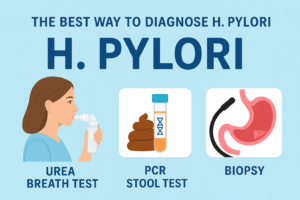
Often, yes. H. pylori is usually treated with triple antibiotics, which can damage the microbiome. Some strains hide and don’t show up on follow-up tests.
I use herbal approaches like Matula tea, zeolites for ammonia, and soothing herbs such as slippery elm and marshmallow root.
I also use probiotics like L. reuteri. Most patients respond well—sometimes one round is enough, sometimes two.
Nutrient Deficiencies and Silent Symptoms
Nishtha Patel
Many patients have low B12, iron, or other deficiencies due to absorption issues caused by SIBO or food sensitivities.
Some people have silent reflux—no heartburn, just a lump in the throat or swallowing discomfort.
Food Sensitivities and Elimination
Nishtha Patel
There’s a big difference between allergies, sensitivities, and intolerances. Sensitivities can take up to 72 hours to appear, making them hard to detect.
I recommend food diaries or photo tracking. Elimination diets can also be effective—removing suspected foods for six weeks, then reintroducing them one at a time.
Helpful Supplements and Soothing Agents
Nishtha Patel
Soothing supplements like slippery elm and deglycyrrhizinated licorice help calm inflammation.
If stomach acid is low, betaine HCl with pepsin or apple cider vinegar can help. Digestive bitters also stimulate enzyme and acid production.
Healing foods like bone broth, cooked apples, pears, and pureed soups support gut recovery.
Risks of Long-Term Proton Pump Inhibitor Use
Nishtha Patel
PPIs can be helpful short-term, but long-term use can lead to deficiencies in B12, magnesium, calcium, and iron.
They also increase the risk of infections like H. pylori and C. difficile. I see many elderly patients who’ve been on PPIs for years and are now fatigued, osteoporotic, or cognitively impaired.
Safely Weaning Off PPIs
Nishtha Patel
Never stop PPIs suddenly. Always taper under medical guidance. I communicate with patients’ doctors and build a gradual tapering plan.
We support digestion with bitters, apple cider vinegar, and eventually betaine HCl, while healing the gut lining with aloe vera, slippery elm, and L-glutamine.
Balancing Acid with Functional Support
Josef Kreitmayer
It seems contradictory to lower acid with PPIs and then increase it with supplements.
Nishtha Patel
It does, but betaine HCl helps digestion when acid is low—only if there’s no gastritis or ulcer.
We test tolerance carefully by slowly increasing the dose until a mild warmth is felt, then adjusting accordingly.
Top 5 Do’s and Don’ts Before Treatment
Nishtha Patel
Do:
See your doctor to rule out structural issues.
Stop eating three hours before bedtime.
Eat slowly and chew properly.
Modify lifestyle habits first.
Work with a practitioner before using supplements.Don’t:
Don’t self-medicate without guidance.
Don’t assume reflux is caused by high acid.
Don’t ignore stress and emotional triggers.
Don’t underestimate poor sleep and device use.
Don’t give up—functional medicine often finds answers.
Patient Treatment Timeline
Nishtha Patel
Timelines vary. H. pylori often improves within four to six weeks. Infections may take three months. Structural issues take longer. It all depends on the root cause.
How Nishtha Works with Clients
Nishtha Patel
I begin with a discovery call, then offer packages with three, four, or eight sessions depending on complexity.
After the first session, clients receive a full plan covering diet, supplements, and lifestyle changes. We reassess every four to six weeks and adjust as needed.
Additional Programs and Retreats
Nishtha Patel
I run retreats with my partner through The Gut Expert and The Wellness Mommas. These include nourishing food, yoga therapy, somatic work, and education.
We also offer corporate wellness programs and are launching a membership platform. It’s not just for moms—it’s for anyone who needs a reset or transformation.